Receiving an ILM referral is genuinely disheartening, particularly for candidates who have invested substantial time and effort in their submission and who may be uncertain about exactly what the referral means or what is required to address it. The first and most important thing to understand is that an ILM referral is not a fail: it is a decision that the submitted evidence does not yet fully demonstrate that the assessment criteria have been met, and the candidate has the opportunity to resubmit with additional or revised evidence. City and Guilds (ILM) quality assurance policy ensures that every referred candidate receives feedback identifying which criteria have not been met and the general nature of the insufficient evidence, but the specificity of that feedback is constrained by regulatory standards designed to prevent assessors from effectively writing the submission for the candidate. Understanding how to interpret assessor feedback, how to construct a criterion-by-criterion improvement plan, and how to approach resubmission strategically, maximising the value of the allowed attempts without repeating the errors that caused the original referral, is the practical knowledge most candidates lack when they receive their referral notification. This guide addresses all of these questions with the operational specificity that generic "study skills" guidance cannot provide.
What an ILM Referral Means, and What It Does Not
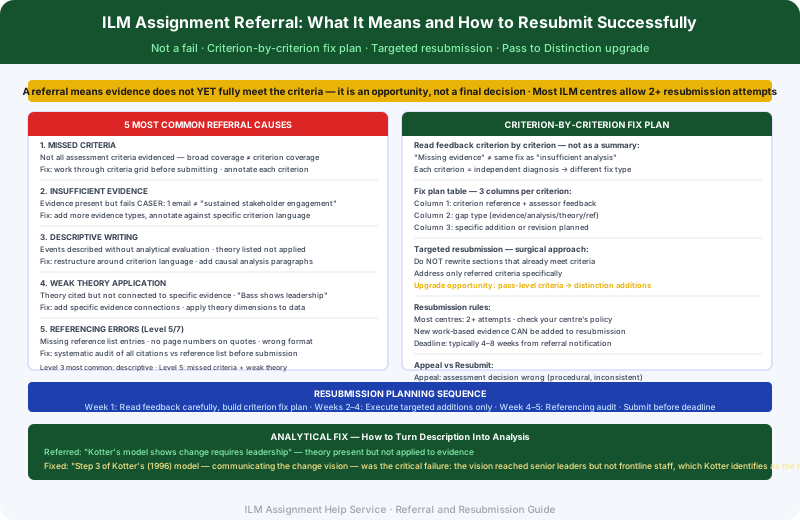
An ILM referral is a formal assessment decision, made by the candidate's assessor and typically reviewed by an internal quality assurer (IQA), that the submitted assignment or portfolio does not fully meet the assessment criteria for the unit. The specific criteria that are not met are identified in the assessor's feedback, though the language used in the feedback is constrained by City and Guilds quality assurance standards: assessors cannot rewrite the submission or provide model answers, but they can and must identify which criteria are not evidenced and give a general indication of what type of improvement is needed.
What a referral does not mean: it does not mean the candidate has failed the qualification, failed the unit, or exceeded their allowed submission attempts. ILM policy typically allows at least two resubmission attempts before a unit is considered failed, though the exact number of permitted resubmissions is determined by the ILM centre's own policy within the City and Guilds guidelines, and candidates should check this directly with their centre. A referral also does not mean that all the work submitted was inadequate; in most referred submissions, some criteria are fully met and only specific criteria require additional evidence or development. Identifying precisely which criteria are fully met, partially met, and not met is the first step in a strategic resubmission plan.
What a referral does tell you: the assessor has identified a gap between what was submitted and what the assessment criteria require. That gap may be structural (missing evidence for a specific criterion), analytical (evidence present but insufficiently developed), theoretical (management theory not cited or not applied correctly), or evidential (work-based evidence missing, insufficient, or not authenticated). Each type of gap requires a different remediation approach, and attempting to fix an analytical gap by adding more descriptive content, or attempting to fix an evidential gap by extending the written analysis, will not result in a successful resubmission. The referral feedback, read carefully and criterion by criterion, is the diagnostic tool that identifies which type of gap applies to each referred criterion.
Five Most Common Referral Causes Across All ILM Levels
Analysis of ILM assessor feedback patterns across levels identifies five causes that account for the large majority of referrals at all qualification levels. The first is missed criteria: the candidate has addressed some but not all of the assessment criteria for the unit, either because the criteria not addressed were not noticed during drafting or because the candidate assumed that broad coverage of the topic area would satisfy specific criteria without explicitly addressing each one. Every ILM unit specification lists assessment criteria in a structured grid, typically four to eight criteria per unit, and the submission must provide explicit evidence for each criterion. Criteria not explicitly evidenced will not be inferred by the assessor, regardless of how comprehensive the broader submission appears.
The second cause is insufficient evidence: evidence is present for the criterion but does not meet the quantity, currency, or authenticity standards required. A single email chain cited as evidence of "effective stakeholder communication across the project lifecycle" is insufficient if the criterion requires evidence of sustained engagement across multiple project stages. A witness statement describing the candidate as "a capable communicator" is insufficient for a criterion requiring evidence of "adapting communication style to different stakeholder groups." The third cause is descriptive writing submitted in place of analysis: the candidate has described their management experience, their organisation, or a theoretical framework without demonstrating the analytical engagement, evaluating, comparing, connecting theory to evidence, that the criterion requires. At Level 5, description of a change management situation without critical evaluation of the management approach using Kotter or Lewin will meet the descriptive standard but not the analytical criterion.
The fourth cause is weak or missing theory application: theoretical models are not cited, are cited by name without author and year, are summarised without being applied to the candidate's specific evidence, or are applied in a way that does not map to the specific criterion language. Citing "Maslow's pyramid" without applying specific hierarchy levels to specific team members' motivational needs, or citing "transformational leadership" without applying Bass's Four Is to specific 360-degree feedback findings, are examples of theory present but not applied at the standard the criterion requires. The fifth cause is referencing errors: at Level 5 and Level 7, missing or incorrect Harvard referencing (citations without reference list entries, reference list entries without corresponding in-text citations, incorrectly formatted author-date citations, missing page numbers for direct quotations) is assessed as an academic standards failure and contributes to referral decisions, particularly where the referencing errors affect the credibility of the theoretical evidence.
How to Read Assessor Feedback Correctly
ILM assessor feedback on a referred submission is typically structured by assessment criterion: for each criterion that is not met, the assessor provides a brief statement explaining why the criterion has not been evidenced and what general type of additional evidence or development is needed. Reading this feedback correctly requires understanding what assessors can and cannot say. City and Guilds quality assurance standards prevent assessors from: writing the submission for the candidate (providing model answers or exemplar paragraphs), specifying the exact evidence the candidate must provide (which could amount to directing the candidate's response to the point of compromising authenticity), or guaranteeing that a particular approach will result in a pass (which would undermine assessment integrity). Assessors can and must: identify which criteria are not met, state whether the gap is evidential or analytical, indicate the general type of evidence or analytical development that would address the gap, and comment on referencing and format issues.
Reading the feedback criterion by criterion is essential. Each criterion statement in the feedback is an independent diagnostic: "AC 2.1: insufficient evidence of stakeholder analysis" is a different type of gap from "AC 2.1: stakeholder analysis present but not evaluated for effectiveness." The first indicates missing evidence; the second indicates that evidence is present but the analytical treatment is insufficient. The resubmission response to each is different: the first requires new or additional evidence; the second requires a revised analytical section that evaluates the existing evidence more critically. Candidates who respond to all feedback by adding more descriptive content, more background about the organisation, more explanation of what they did, more theory description, are responding to the wrong gap type and their resubmission will address the wrong problem.
After reading the feedback, the candidate should produce a table with three columns: the assessment criterion reference, the assessor's feedback for that criterion, and the specific remediation action planned (type of additional evidence, analytical extension, referencing correction). This table is the resubmission plan: it ensures that every referred criterion is addressed specifically and that the resubmission is targeted rather than comprehensive revision that adds volume without addressing the specific identified gaps.
Criterion-by-Criterion Fix Plan: Building a Targeted Resubmission
A targeted resubmission addresses each referred criterion specifically without unnecessarily revising sections of the submission that already meet the assessment standard. Comprehensive revision of a referred submission, rewriting everything from scratch or adding substantial new content throughout, wastes time and risks introducing new weaknesses into sections that previously met their criteria. The professional resubmission approach is surgical: each referred criterion is addressed with the minimum additional evidence or analytical development needed to meet the criterion, and the existing submission is preserved where it already demonstrates criterion coverage.
Criterion-by-criterion fix plan structure: for each referred criterion, identify (1) the specific gap type (missing evidence, insufficient evidence, insufficient analysis, missing theory, referencing error); (2) the specific addition or revision that directly addresses that gap; (3) the evidence source for any new evidence required; and (4) the word count extension estimated for the analytical addition. A typical referred Level 5 submission requires three to six specific additions rather than a complete rewrite: an additional piece of work-based evidence for one criterion, a deepened analytical section for another, a corrected referencing entry for a third. Completing the resubmission plan before writing ensures that the candidate spends their limited resubmission time on the highest-impact changes rather than on comprehensive revision that addresses the wrong gaps.
For analytically insufficient criteria, the fix is always more specific application of theory to evidence, not more theory description. If AC 3.2 requires the candidate to "evaluate the effectiveness of stakeholder management strategies applied in a project" and the assessor's feedback notes "description of strategies without evaluation of effectiveness," the fix is a new paragraph that takes the existing stakeholder management description and adds an evaluative layer: identifying specific outcomes the strategies produced, comparing actual outcomes against intended outcomes, and connecting the evaluation to Mendelow's (1991) framework to explain why specific strategies were more or less effective for specific stakeholder groups. The original description paragraph may remain; the evaluation paragraph is the specific addition the criterion requires.
Resubmission Timelines: ILM Centre Policies and Limits
ILM resubmission timelines are determined by the individual centre's assessment policy within City and Guilds quality assurance guidelines. Most centres allow candidates a minimum of two resubmission attempts per unit, with a specified timeframe for each resubmission, typically four to eight weeks from the date of the referral notification, depending on the centre's programme schedule. Some centres impose a maximum of three total submissions (original plus two resubmissions); others allow additional attempts at the assessor's discretion. Candidates should contact their centre coordinator or programme manager immediately on receiving a referral to confirm: (1) the number of resubmission attempts allowed under the centre's policy; (2) the deadline for the first resubmission; (3) whether resubmissions require booking in advance or can be submitted at any time within the allowed window; and (4) whether the centre has an independent academic support mechanism (ILM centres are required by City and Guilds to provide some form of academic support for referred candidates, though the nature and extent of that support varies significantly between centres).
The resubmission deadline matters strategically: candidates who receive their referral and immediately begin a comprehensive rewrite, addressing everything simultaneously, often produce a resubmission that adds volume but does not target the specific criterion gaps. Candidates who spend the first week reading the feedback carefully, producing a criterion-by-criterion fix plan, and identifying the specific evidence or analytical development needed for each gap, then spend the remaining time executing the plan precisely, consistently produce more effective resubmissions in less time. The timeline pressure of a resubmission deadline is real, particularly for working professionals with substantial job responsibilities, and targeted resubmission planning is a practical response to that pressure.
Moving from Pass to Distinction After Referral: The Upgrade Strategy
A referred candidate whose original submission met some criteria at pass standard but missed others has the opportunity in resubmission not just to meet the missed criteria but to improve the quality of their response across the submission as a whole. Resubmission is not only about passing; it is about the quality of the qualification outcome. A candidate who receives a referral, addresses only the minimum required to pass the referred criteria, and submits without considering the distinction standard will pass but will not achieve the distinction outcome that stronger analytical engagement could have produced.
The upgrade strategy: when planning the resubmission, identify not only the referred criteria but also the pass-level criteria that were met, and evaluate whether any of those criteria could be elevated to distinction standard with targeted analytical development. Distinction criteria at Level 5 typically require the candidate to evaluate the limitations of the frameworks applied, compare alternative theoretical approaches, and demonstrate forward-looking development planning that is SMART and evidence-connected. If the original pass-level analysis of Bass's transformational leadership model applied the Four Is to 360-degree feedback data accurately but did not evaluate the model's limitations or compare it to an alternative framework, adding that evaluative layer to the resubmission, even though the criterion was technically met at pass standard, can shift the overall submission quality toward distinction. This approach maximises the resubmission opportunity rather than treating it as a minimum-compliance exercise.
Have you received your referral feedback and are not sure how to interpret it or where to start with the resubmission?
The most common resubmission experience is reading assessor feedback that identifies gaps without providing the specific guidance needed to address them, because, as noted above, City and Guilds quality assurance standards constrain the specificity of assessor guidance to protect assessment integrity. Most referred candidates understand at a general level what "insufficient analytical depth" or "evidence not meeting CASER standards" means, but do not know precisely how to translate that general feedback into specific additions that will meet the criterion at the required level. Our resubmission support service reads the assessor's feedback criterion by criterion, maps it to the specific assessment criteria in the unit specification, and provides a targeted fix plan identifying the specific evidence additions, analytical extensions, and referencing corrections that are most likely to address each referred criterion, at the analytical standard required for the level, not as generic academic writing guidance. We also evaluate whether the existing submission has unrealised distinction potential and, where it does, advise on the targeted analytical additions that would elevate the submission quality alongside addressing the referral.
Common Referral Patterns by ILM Level
Referral causes vary by level. At Level 3, the most common cause is descriptive writing: candidates describe their team and their management activities without connecting them to theoretical frameworks, and the assessment criteria requiring theory application are not met. At Level 4, the most common cause is the analytical depth gap: Level 4 sits between Level 3 and Level 5 and requires more critical engagement than Level 3 candidates expect, particularly in units on understanding change and developing leadership styles. At Level 5, the most common causes are missed criteria (the 360-degree feedback analysis criterion in leadership units, the causal financial analysis criterion in management units) and insufficient theory application (models cited but not applied analytically). At Level 7, the most common cause is sequential rather than synthesised theory application: frameworks applied one by one to different aspects of the same strategic question rather than triangulated against each other to build an integrated analytical argument. See also: ILM assessment standards across levels · Work-based evidence standards and CASER criteria · Level 3 assignment requirements · Level 5 analytical standards · Reflective account writing help
When to Appeal vs When to Resubmit
An ILM appeal is appropriate when the candidate believes the assessment decision itself is wrong, that the submitted work did meet the assessment criteria but the assessor's decision was incorrect, inconsistent with the stated criteria, or procedurally flawed. An appeal is not appropriate as an alternative to resubmission where the referral decision is substantively correct. City and Guilds (ILM) has a formal appeals procedure that requires the candidate to submit their appeal through the ILM centre, with supporting evidence of the specific grounds for appeal, typically within four weeks of the referral decision. The grounds for appeal are limited: procedural irregularity (the assessment was not conducted in accordance with the stated procedure), inconsistency (the assessment criteria were applied differently to this candidate than to others in the same cohort), or bias (the assessor's decision was influenced by factors other than the merits of the submitted work). If the referral decision appears correct on its merits, if the feedback identifies genuine gaps in the submission, the appropriate response is resubmission, not appeal. Pursuing an appeal for a substantively correct referral decision delays the resubmission timeline and is unlikely to succeed. See also: ILM assessment policy overview · Evidence standards and assessor requirements
ILM Assignment Referral and Resubmission Guide: Frequently Asked Questions
How many times can I resubmit a referred ILM assignment?
The number of permitted resubmissions is determined by the ILM centre's assessment policy within City and Guilds quality assurance guidelines. Most centres allow a minimum of two resubmission attempts per unit (original submission plus two resubmissions), though some allow additional attempts at the assessor's discretion. If a unit is not passed within the allowed resubmission attempts, the candidate may need to complete an alternative assessment task or, in some cases, retake the unit. Confirm the specific resubmission policy with your centre coordinator immediately upon receiving a referral notification, before beginning your resubmission, so you can plan your attempts strategically.
Can I add new work-based evidence in my resubmission, or only revise what I already submitted?
Yes. ILM resubmissions can include new work-based evidence that was not in the original submission, provided the new evidence meets the currency, authenticity, sufficiency, relevance, and evidential clarity standards (CASER). Adding new evidence that more directly addresses a criterion for which the original evidence was insufficient is a legitimate and often highly effective resubmission strategy. New evidence produced after the original submission date can be used; it must simply be current (within the standard timeframe for the level), authentic, and directly relevant to the criterion it is cited for. There is no requirement to limit the resubmission to revision of the original content only.
Should I rewrite my whole assignment for resubmission or only address the referred criteria?
Address the referred criteria specifically; do not rewrite sections that already meet their assessment criteria unless you are actively trying to improve from pass to distinction standard in those sections. Comprehensive rewriting risks introducing new weaknesses into sections that were previously assessed as meeting the criteria, and adds significant time pressure without proportionate benefit. The professional approach is a criterion-by-criterion fix plan: identify the specific gap type for each referred criterion (missing evidence, insufficient analysis, theory not applied, referencing error), plan the specific addition or revision that addresses each gap, execute that targeted resubmission, and preserve the existing content where it already meets the assessment standard.
Common Questions
Is this service specific to ILM qualifications?
Yes. We specialise exclusively in City & Guilds ILM qualifications. Our writers are selected for their specific knowledge of ILM units, marking criteria, and grade descriptors — not generic academic writing.
Will my assignment be plagiarism free?
Every assignment is written from scratch and run through Turnitin before delivery. You receive a copy of the originality report alongside your completed work.
How quickly can you complete my assignment?
Standard turnaround is 5–7 days. For urgent orders we offer 24-hour and 48-hour expedited delivery at an additional cost. Contact us to confirm availability for your deadline.
What if I'm not happy with the work?
We offer unlimited free revisions within 14 days of delivery. If we cannot meet your requirements after multiple revisions, we offer a full refund — no questions asked.